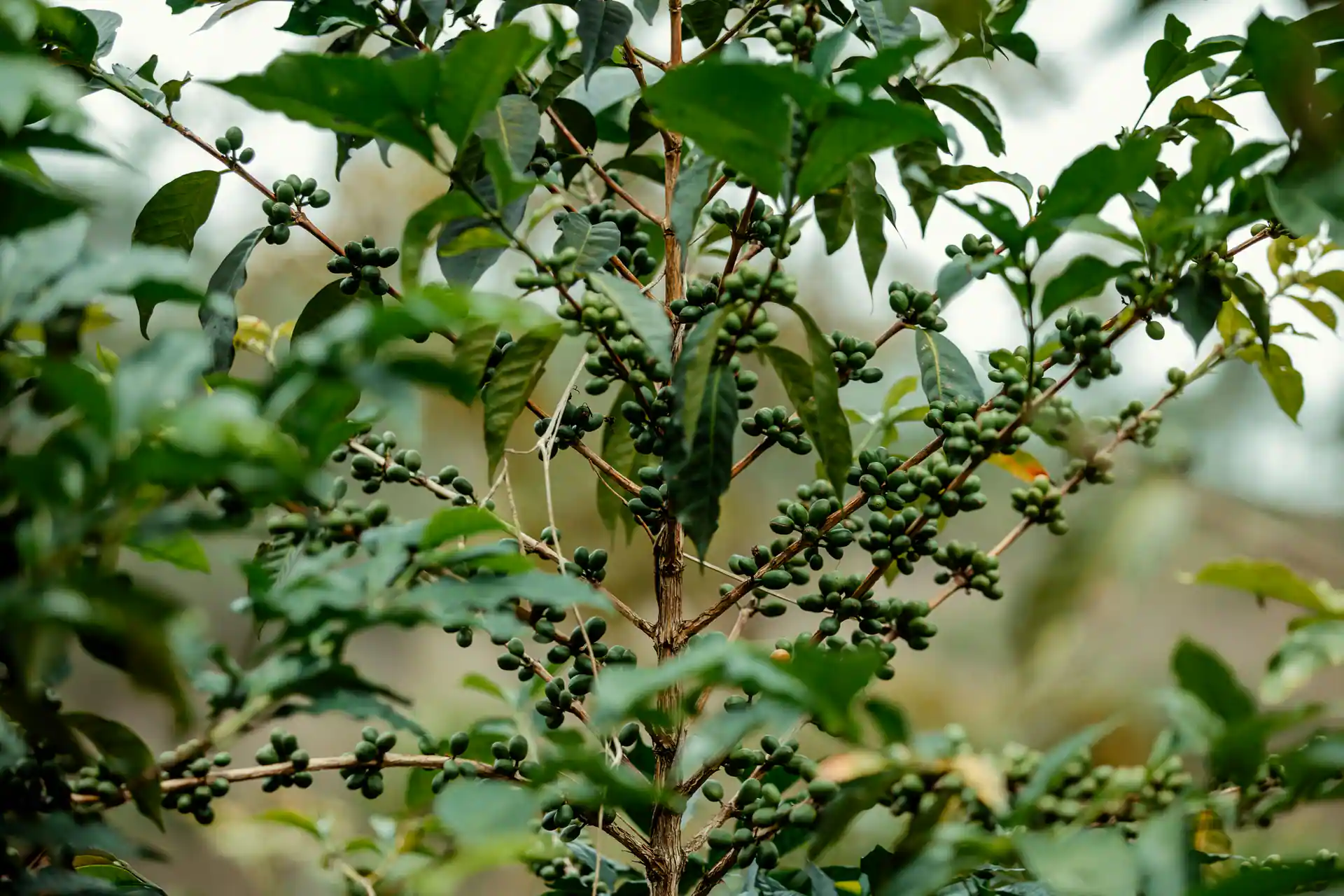
Acacia Valley highlands, East Africa

Our Process

From cherry to export bag, all on the estate

Six controlled steps, one farm. We have the space and the people to take time with every lot rather than rushing the harvest through a central co-op.

How a coffee cherry becomes a 60kg bag

Every step happens on Acacia. Every lot is tracked from the block it grew on to the bag it ships in.

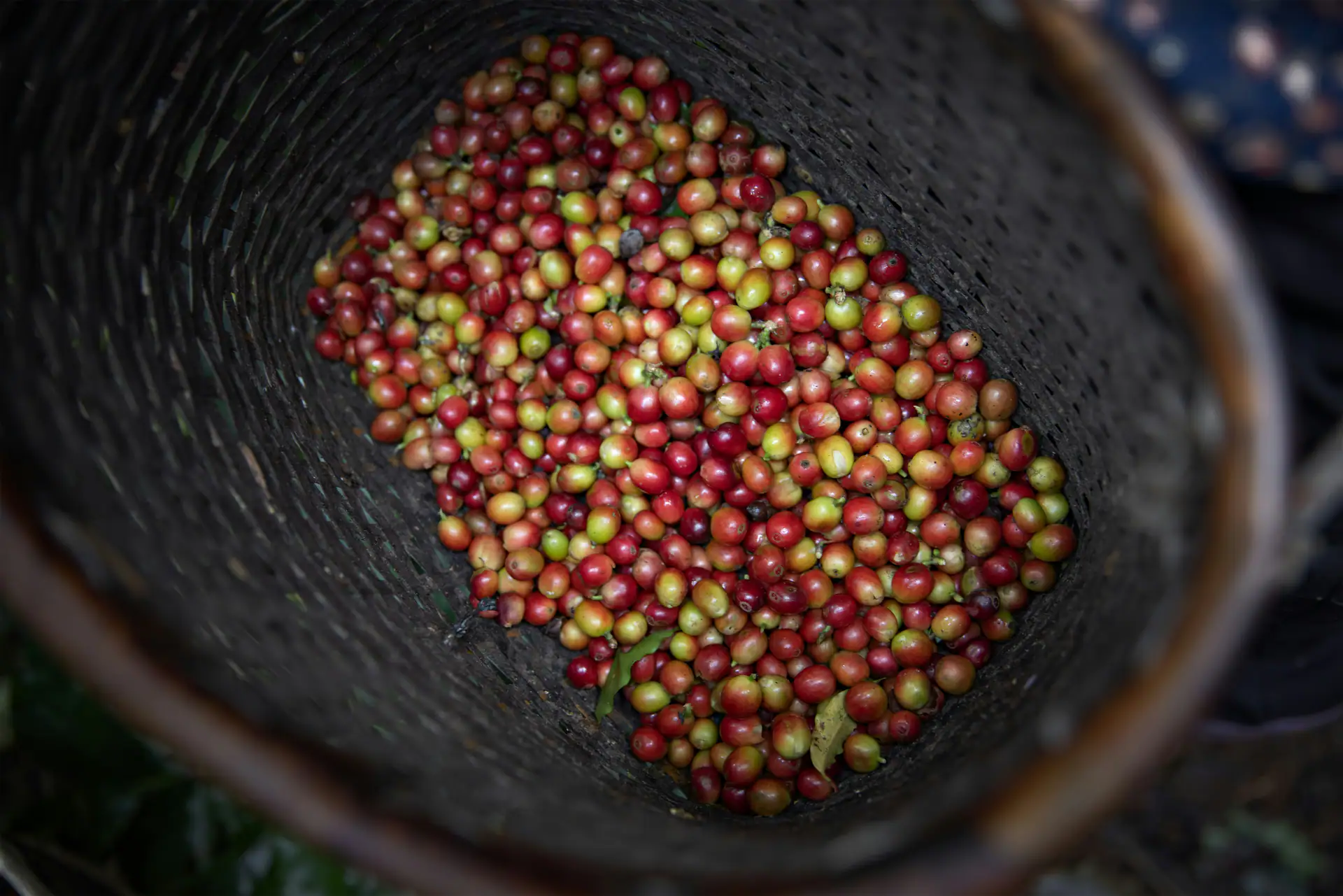
Hand-picking ripe red cherries during harvest
Step 1 · Pick

Selective harvesting

Only ripe red cherries. Pickers walk each block multiple times across the season so under-ripe and over-ripe cherries stay on the tree. On arrival every batch is floated to remove defects before it touches the mill.
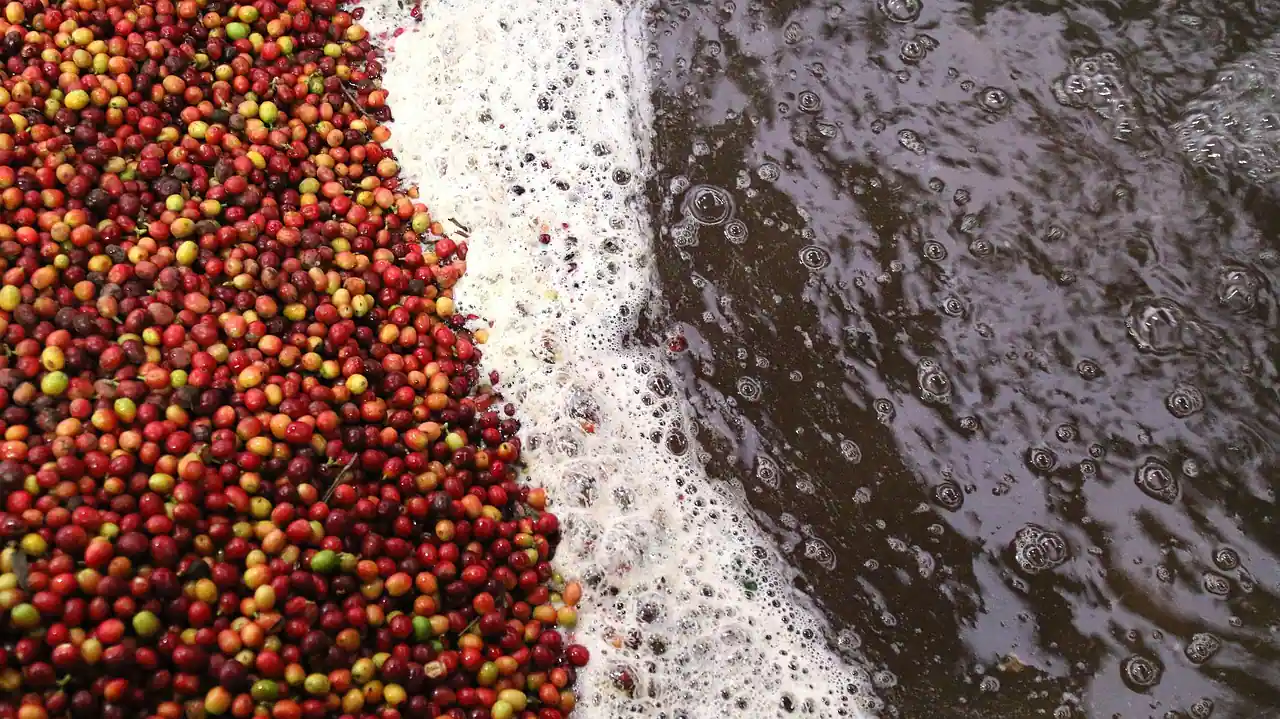
Spring water flowing through the wet mill at the estate
Step 2 · Pulp

Spring-fed pulping

Cherries are de-pulped within hours of picking using water from two natural springs above the mill. Skin and pulp are weighed and sent back to the fields as compost. Nothing is wasted.

Coffee parchment in fermentation tanks
Step 3 · Ferment & wash

Clean ferment, density sort

Washed lots ferment for 24 to 36 hours, then are washed and density sorted in graded channels. Naturals skip this step and go straight to drying. Carbonic lots ferment whole-cherry in sealed tanks for 72 to 96 hours.

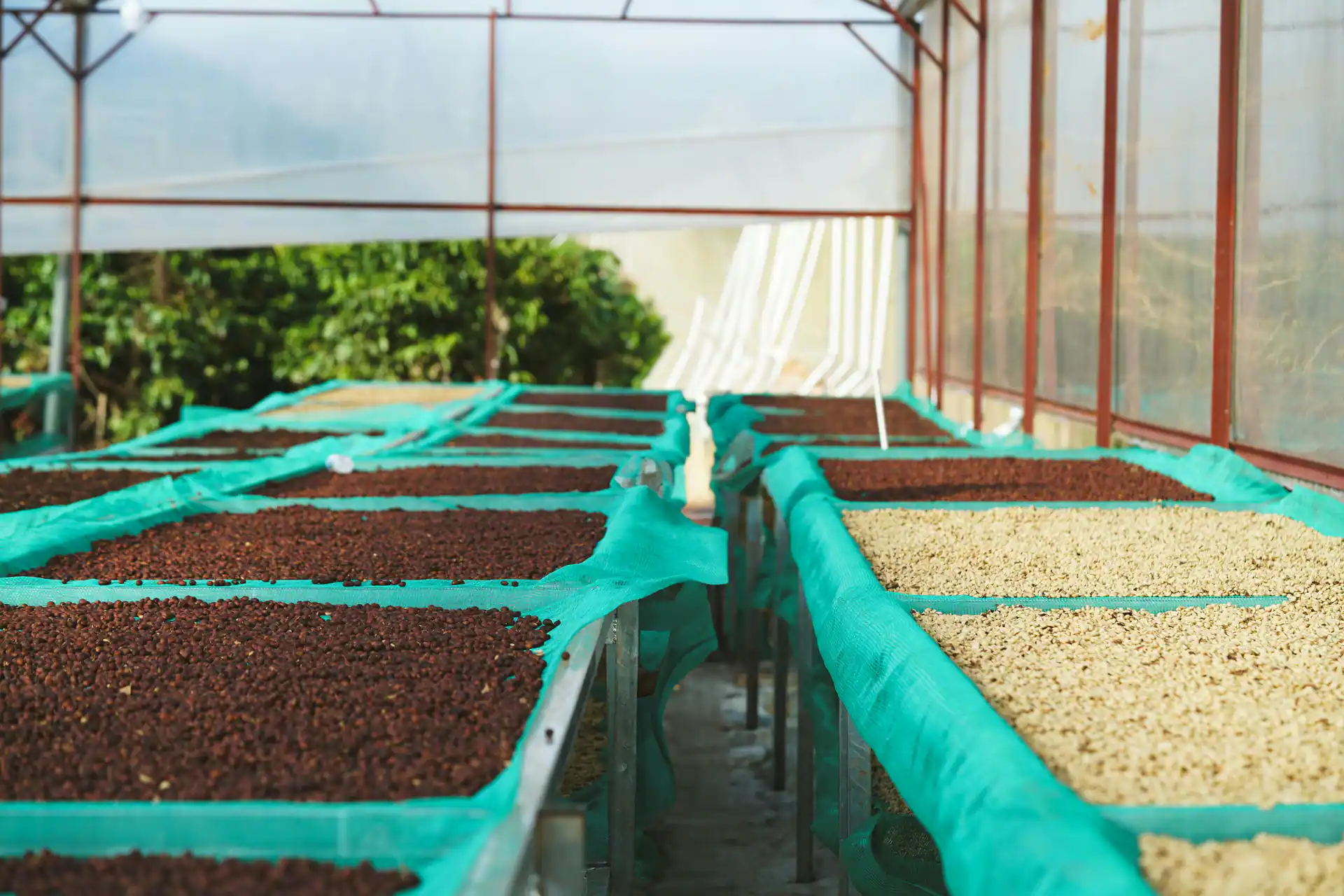
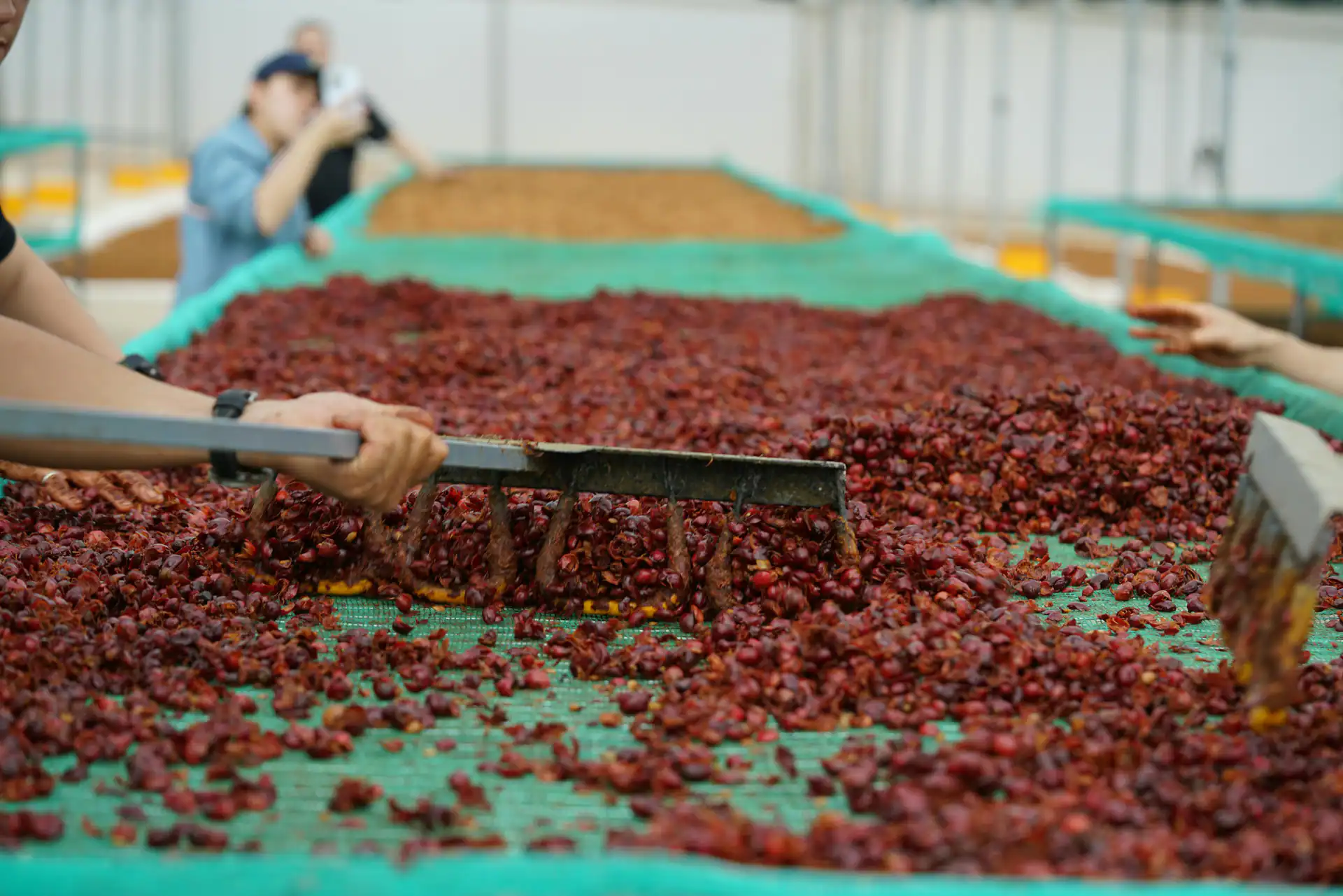
Coffee parchment drying on raised African beds
Step 4 · Dry

Raised African beds

Twelve to eighteen days under shade cloth, turned by hand four times a day. We dry to 11 percent moisture, no faster, no slower. Slow drying is the difference between a clean cup and one that fades.

Green coffee being graded and hand-sorted
Step 5 · Grade

Screen, density, hand-sort

Parchment is rested for at least 30 days, then hulled, screened by size, density-sorted and optically scanned. Peaberry is separated. A final hand-sort removes any remaining defects.

A cupping table set up at the estate
Step 6 · Cup & bag

Daily cupping, then export

Every lot is cupped on the SCA scale by our team before bagging. Lots that score under 82 are downgraded. Approved lots are bagged in 60kg jute with GrainPro inner liners and tagged with block, variety, process and harvest date.

Volcanic soil, cold nights, two rainy seasons

The process only works because of where we grow. Acacia Valley sits on the eastern slopes of an ancient caldera, between 1,600 and 1,900 metres. Deep volcanic soil, a bimodal rainfall pattern and cold highland nights give coffee time to develop slowly and ripen evenly.

The estate covers 420 hectares. Around 320 are planted to coffee, split across blocks by altitude and variety. The remainder is shade trees, riparian strips and indigenous forest, all of which feed back into the cup.

1,900m
Top altitude
420 ha
Total estate
320 ha
Planted to coffee
Coffee rows climbing a terraced volcanic slope

Three highland varieties

Variety

SL28

The backbone of highland East African specialty coffee. Drought resistant, with a classic blackcurrant and citrus cup profile. Planted around 1,800 metres.

Variety

Bourbon

Soft and sweet in the cup with good body. On the estate since the first trees went in the ground in 1960. Planted between 1,600 and 1,750 metres.

Variety

Local heirlooms

A handful of blocks are planted to local heirloom selections kept alive by the estate. Small volumes, experimental lots only, reserved for specialty buyers.

Every bag, every step

The process is only useful if we can prove it. Every lot ships with full block-to-bag documentation.

Block-level data

Every bag carries the block it came from, the variety, the process and the harvest date.

SCA cup score

Every lot has a written SCA cupping report and defect count attached before it leaves the warehouse.

Phytosanitary docs

Origin certificates, phytosanitary documentation and packing lists travel with every shipment to the export port.

Open to visits

Roasters who source from us are welcome on the farm during harvest. Walk the blocks, taste the lots, meet the people.

See the process for yourself

Roaster and importer visits welcome between August and March. Get in touch in advance so we can plan pickup from the nearest city and a cupping session on-site.

This is a demo site created by WebRevive. Acacia Coffee Co. is a placeholder brand used to showcase the build for any East African coffee or tea exporter.
WhatsApp Send enquiry